Table of Contents
Back pain is one of the most common health problems affecting people of all ages today. From office workers and students to senior citizens and athletes, many people experience lower back pain due to unhealthy lifestyle habits, poor posture, stress, or injuries. Ignoring back pain for a long time can affect daily activities, mobility, work performance, and overall quality of life.
Fortunately, physiotherapy for back pain is one of the safest and most effective non-surgical treatments available. Professional physiotherapy treatment helps reduce pain, improve flexibility, strengthen muscles, and prevent future problems naturally.
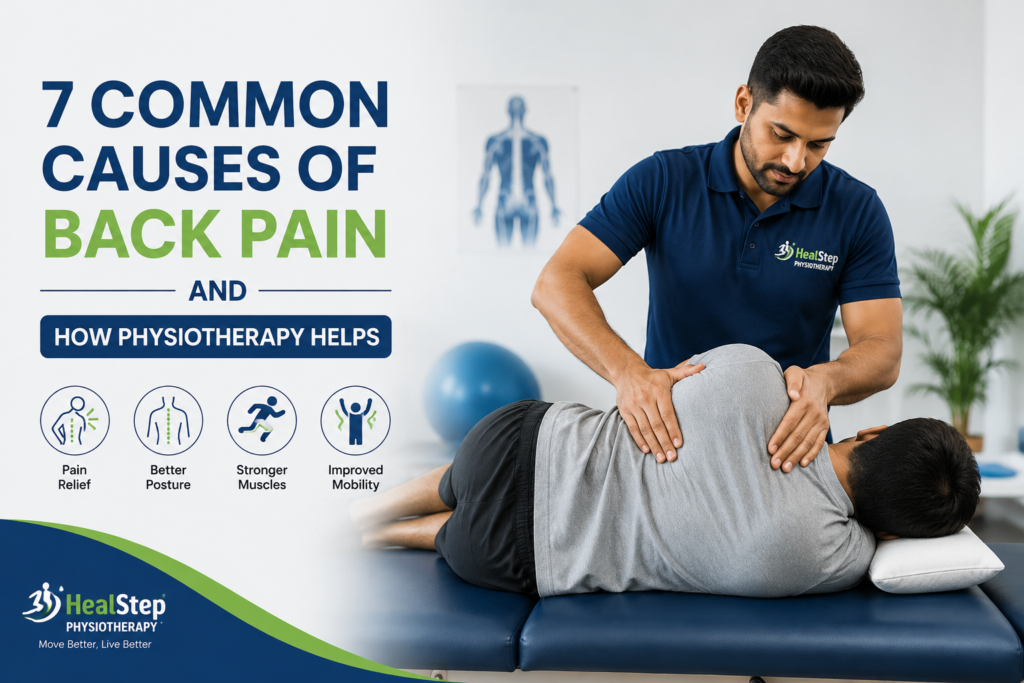
In this blog, we will discuss the 7 common causes of back pain and how physiotherapy helps in long-term recovery.
1. Poor Posture
Poor posture is one of the biggest reasons behind chronic back pain. Sitting for long hours while working on laptops, using mobile phones continuously, or slouching while standing puts extra pressure on the spine and muscles.
Many people today suffer from posture-related back pain due to work-from-home culture and desk jobs.
Symptoms of Poor Posture Back Pain
- Neck stiffness
- Lower back pain
- Shoulder tightness
- Muscle fatigue
- Difficulty sitting for long periods
How Physiotherapy Helps
A physiotherapist helps correct posture through:
- Posture correction exercises
- Stretching techniques
- Spine alignment therapy
- Muscle strengthening exercises
- Ergonomic advice for sitting and working
Regular physiotherapy sessions improve spinal health and reduce stress on muscles and joints.
2. Sitting for Long Hours
Modern lifestyles involve excessive sitting, whether at offices, schools, or home. Long sitting hours weaken back muscles and increase pressure on the lower spine.
This condition is very common among IT professionals, students, drivers, and office workers.
Effects of Long Sitting
- Tight hip muscles
- Weak core muscles
- Reduced flexibility
- Lower back stiffness
- Poor blood circulation
Physiotherapy Treatment
Physiotherapy focuses on:
- Mobility improvement exercises
- Core strengthening
- Stretching routines
- Flexibility training
- Pain management therapy
A physiotherapist also guides patients about proper sitting posture and movement habits.
3. Muscle Strain and Ligament Injury
Sudden movements, lifting heavy objects incorrectly, gym injuries, or overexertion can strain muscles and ligaments in the back.
Muscle strain is one of the most common causes of acute back pain.
Common Symptoms
- Sharp back pain
- Muscle spasms
- Swelling
- Difficulty moving
- Pain during bending or lifting
How Physiotherapy Helps
Professional physiotherapy treatment helps by:
- Reducing inflammation
- Relaxing tight muscles
- Improving mobility
- Strengthening injured muscles
- Speeding up recovery
Techniques like manual therapy, heat therapy, ultrasound therapy, and rehabilitation exercises are commonly used.
4. Herniated Disc or Slipped Disc
A slipped disc occurs when spinal discs become damaged or displaced, causing pressure on nearby nerves. This condition can cause severe pain and discomfort.
Symptoms of Slipped Disc
- Lower back pain
- Pain radiating to legs
- Numbness or tingling
- Weakness in legs
- Difficulty walking
Physiotherapy for Slipped Disc
Physiotherapy is highly effective for non-surgical slipped disc treatment. Treatment may include:
- Spine stabilization exercises
- Stretching therapy
- Core strengthening
- Nerve mobilization techniques
- Pain relief modalities
Early physiotherapy intervention can prevent worsening of the condition and improve recovery naturally.
5. Lack of Physical Activity
A sedentary lifestyle weakens muscles and reduces spinal support. People who rarely exercise are more likely to develop chronic back pain and stiffness.
Physical inactivity also leads to obesity, which increases pressure on the spine.
Risks of Inactive Lifestyle
- Weak muscles
- Reduced flexibility
- Poor posture
- Weight gain
- Joint stiffness
Physiotherapy Benefits
A physiotherapist creates personalized exercise plans to:
- Improve mobility
- Increase flexibility
- Build muscle strength
- Improve posture
- Reduce pain naturally
Regular physical activity combined with physiotherapy helps maintain long-term spinal health.
6. Sports Injuries
Athletes and physically active individuals often experience back injuries due to overtraining, improper techniques, or sudden impact.
Sports like cricket, football, tennis, weightlifting, and running can strain the back muscles and spine.
Common Sports Injury Symptoms
- Muscle tightness
- Lower back pain
- Reduced performance
- Limited flexibility
- Muscle imbalance
Sports Physiotherapy Treatment
Sports physiotherapy focuses on:
- Injury rehabilitation
- Muscle recovery
- Strength training
- Flexibility exercises
- Injury prevention programs
Professional physiotherapy helps athletes recover safely and return to sports faster.
7. Age-Related Spine Problems
As people age, spinal discs, joints, and muscles naturally weaken. Conditions like arthritis, osteoporosis, and degenerative disc disease become more common in senior citizens.
Common Age-Related Symptoms
- Chronic back pain
- Stiffness
- Reduced mobility
- Balance problems
- Joint pain
How Physiotherapy Helps Senior Citizens
Physiotherapy improves quality of life through:
- Gentle strengthening exercises
- Balance training
- Pain management therapy
- Mobility exercises
- Fall prevention programs
Regular physiotherapy helps elderly patients stay active and independent.
Benefits of Physiotherapy for Back Pain
Choosing physiotherapy for back pain offers several long-term benefits without depending heavily on medicines or surgery.
1. Natural Pain Relief
Physiotherapy reduces pain naturally through exercises, manual therapy, and rehabilitation techniques.
2. Improved Flexibility
Stretching and mobility exercises improve body movement and reduce stiffness.
3. Better Posture
Posture correction exercises reduce stress on the spine and muscles.
4. Stronger Muscles
Strengthening exercises provide better support to the spine and prevent future injuries.
5. Faster Recovery
Physiotherapy speeds up recovery after injuries, surgeries, or chronic pain conditions.
6. Prevents Future Problems
Regular physiotherapy reduces the risk of recurring back pain.
Tips to Prevent Back Pain
Here are some simple daily habits to protect your spine and maintain good back health:
- Maintain proper sitting posture
- Avoid sitting continuously for long hours
- Exercise regularly
- Lift heavy objects carefully
- Stretch your body daily
- Maintain healthy body weight
- Use supportive chairs and mattresses
- Stay physically active
Small lifestyle changes can make a big difference in preventing chronic back pain.
When Should You Visit a Physiotherapist?
You should consult a physiotherapist if you experience:
- Persistent back pain
- Difficulty walking or bending
- Pain radiating to legs
- Muscle stiffness
- Reduced mobility
- Pain after injury or exercise
Early treatment prevents complications and helps faster recovery.
Conclusion
Back pain can affect your work, sleep, movement, and overall lifestyle if ignored for a long time. Understanding the common causes of back pain is the first step toward proper treatment and prevention.
Professional physiotherapy for back pain helps reduce pain, improve posture, strengthen muscles, and restore mobility naturally. Whether your pain is caused by poor posture, long sitting hours, sports injuries, or age-related issues, physiotherapy offers safe and effective long-term relief.
If you are struggling with chronic or sudden back pain, consulting an experienced physiotherapist can help you recover faster and improve your quality of life naturally.